
By Mr. Shreekant Prasad
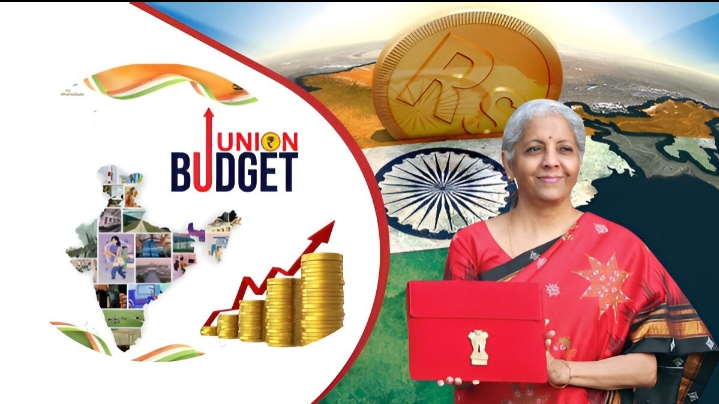
New Delhi, February 14, 2026: The Union Budget 2026–27 outlines a calibrated path toward fiscal consolidation while accelerating reforms across infrastructure, industry, finance, and social sectors. With a strong emphasis on capital expenditure, tax rationalisation, and structural policy initiatives, the Budget seeks to balance growth momentum with macroeconomic stability.
Key Budget Highlights
The total expenditure for 2026–27 is estimated at Rs 53,47,315 crore, marking a 7.7% increase over the revised estimates of 2025–26. Interest payments constitute 26% of total expenditure and 40% of revenue receipts, underscoring the continued fiscal pressure from past borrowings.
Total receipts (excluding borrowings) are projected at Rs 36,51,547 crore, a 7.2% increase over the previous year’s revised estimates. Tax revenues, which form the bulk of receipts, are expected to grow by 8%. Nominal GDP growth for 2026–27 has been estimated at 10%.
The fiscal deficit is targeted at 4.3% of GDP, marginally lower than 4.4% in 2025–26. The revenue deficit remains steady at 1.5% of GDP, while the primary deficit is expected to reduce to 0.7%. The government has reaffirmed its commitment to reduce outstanding liabilities to around 50% of GDP by March 2031; for 2026–27, liabilities are estimated at 55.6% of GDP.
Major Tax Proposals
The Finance Bill introduces significant structural changes while maintaining stability in direct taxation:
- No change in income tax slabs for Assessment Year 2026–27.
- Tax holidays extended:
- Foreign companies providing global cloud services via Indian data centres granted tax holiday until 2047 (subject to routing conditions).
- IFSC and Offshore Banking Units’ tax holiday extended from 10 to 20 years, with 15% tax thereafter.
- Share buybacks to be taxed as capital gains, with additional buyback tax for promoters (effective rates: 22% for corporates, 30% for non-corporate promoters).
- Securities Transaction Tax (STT) increased on options and futures.
- Disallowance of interest deductions against dividend and mutual fund income.
- MAT reforms: MAT rate reduced from 15% to 14%, with restrictions on credit accumulation and utilisation.
- Foreign Assets Disclosure Scheme 2026 introduced for small taxpayers with graded relief.
- Relaxations for non-residents, including exemptions for electronics capital goods suppliers and expert professionals.
- TCS reductions on education, medical remittances, and overseas tour packages.
- Rationalisation and decriminalisation of several tax offences.
Sectoral and Policy Initiatives
Finance & Economy: A High-Level Committee on Banking for Viksit Bharat will review the sector. FEMA rules will be simplified. Portfolio investment limits for Individual Persons Resident Outside India (PROI) will be raised. Municipal bond issuance is incentivised.
Industry & Commerce: 200 legacy industrial clusters to be revived. A comprehensive textile programme and SME Growth Fund (Rs 10,000 crore) aim to strengthen MSMEs and employment generation.
Infrastructure: Public capital expenditure increased to Rs 12.2 lakh crore. Infrastructure Risk Guarantee Fund to boost private participation. Dedicated freight corridors, new national waterways, tourism projects, and electric bus allocations in Purvodaya states announced.
Urban Development: City Economic Regions (CERs) to receive Rs 5,000 crore each over five years. Seven high-speed rail corridors proposed.
Education & Employment: Standing Committee on Education to Employment to assess services sector growth and AI impact. University townships and creative technology labs to be established.
Energy & Technology: Electronics Component Manufacturing Scheme outlay increased to Rs 40,000 crore. Rare Earth Corridors and Semiconductor Mission 2.0 launched. Rs 20,000 crore allocated for carbon capture initiatives.
Health & Pharmaceuticals: Five regional medical hubs, three All India Institutes of Ayurveda, and Biopharma SHAKTI scheme (Rs 10,000 crore) to strengthen domestic innovation.
Agriculture: Support for cooperative members, animal husbandry credit-linked subsidies, and coconut promotion scheme announced.
Fiscal Framework and 16th Finance Commission Recommendations
The 16th Finance Commission (Chair: Dr. Arvind Panagariya) has recommended maintaining states’ share in central taxes at 41% for 2026–31. A new parameter—contribution to national GDP—has been introduced in devolution criteria, alongside income distance, population, area, and forest cover.
Grants-in-aid of Rs 9.47 lakh crore have been recommended for local bodies and disaster management, with performance-linked incentives and focus on wastewater management and urban transition.
The Commission has proposed a fiscal roadmap to reduce the Centre’s fiscal deficit to 3.5% of GDP by 2030–31, with states maintaining a 3% GSDP limit and discontinuing off-budget borrowings.
Union Budget 2026–27 reflects a strategic blend of fiscal prudence and growth-oriented reforms. With enhanced capital expenditure, structural tax changes, strengthened financial markets, and targeted sectoral support, the Budget aims to position India firmly on the path toward sustainable growth and the broader vision of Viksit Bharat by 2047.


