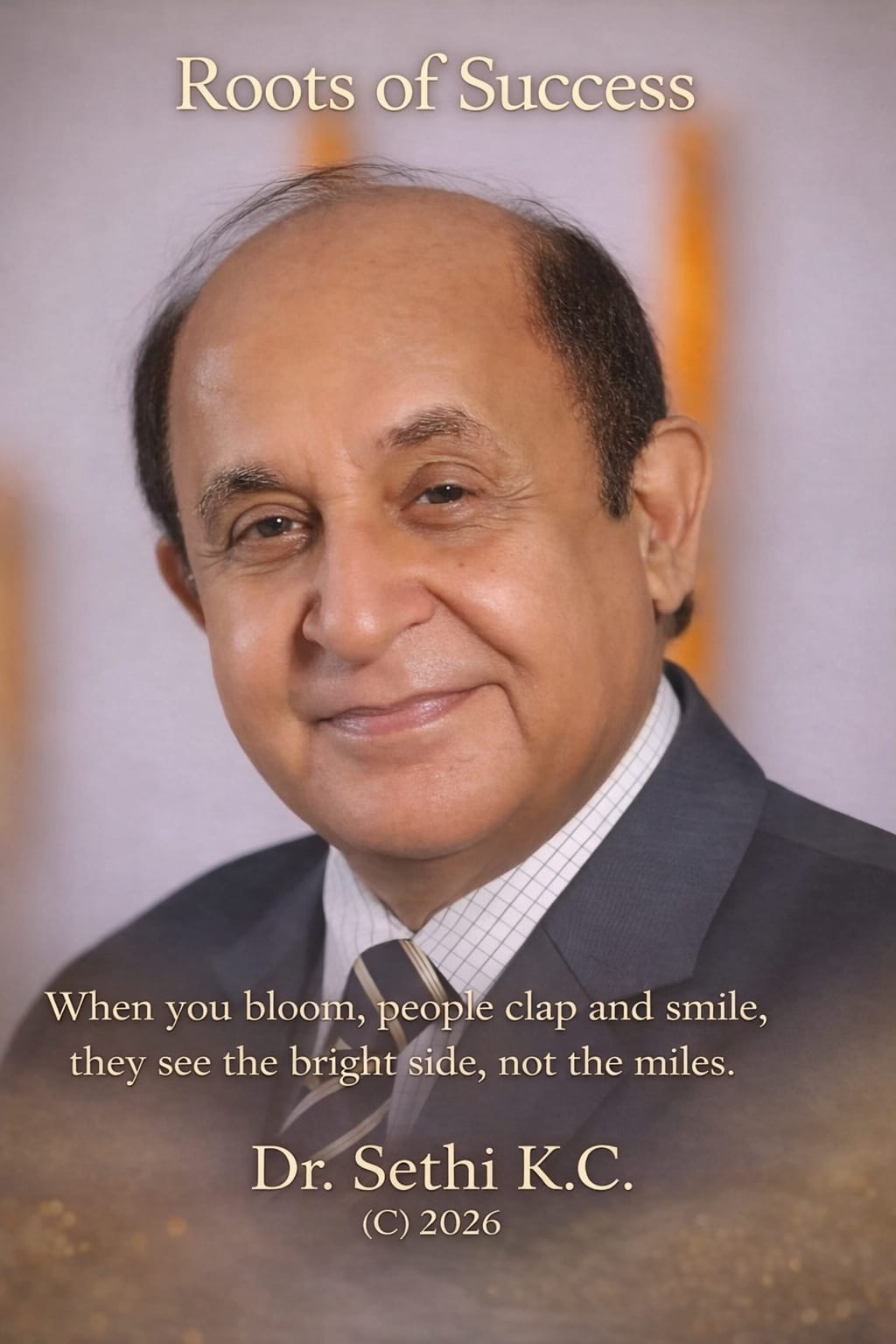
By Dr. Sethi K.C.
This is one of the most puzzling contradictions of our modern human existence: abundance does not guarantee peace. Human beings surrounded by comfort, success, relationships, recognition, and security often experience an inexplicable inner unrest. This paradox challenges the traditional reasoning that possession naturally leads to happiness.
Sethian Philosophy, a doctrine articulated by Dr. Sethi, directly addresses this illusion and raises a more uncomfortable question:
Why is the soul unsettled even when life appears complete?In Sethian thought, this restlessness is not accidental, pathological, or ungrateful. It is philosophical. It signals something fundamental—that peace is not the result of gaining, but of inner organization.
Sethian Aphorism: Possession can fulfill a lifestyle, but only alignment fulfills a life.The Delusion of Possessing It All The contemporary world conditions the human mind to equate fulfillment with achievement. From childhood, people are trained to pursue milestones—education, profession, marriage, property, prestige. Life becomes a checklist. Once the boxes are marked, happiness is expected to follow automatically. But the soul does not recognize checklists.
Sethian Philosophy clearly distinguishes between external completeness and internal coherence. A life may appear complete outwardly, yet remain fractured within. Peace of the soul is felt only when thought, feeling, conscience, and action move in the same direction. Without such harmony, wealth is irrelevant.
Sethian Aphorism: Success that contradicts the truth of the soul does not impress it. The House Beautifully Decorated, Yet Uninhabited Dr. Sethi often illustrates this condition through a simple yet profound image: a beautiful house, fully furnished, electrified, admired—yet uninhabited. It lacks warmth because presence is missing. Similarly, many lives are decorated with success, habits, and social approval. Yet the person within is absent. They are performing life instead of living it.
Sethian Philosophy calls this state inner exile—being everywhere except within oneself. Peace does not enter a life because it appears complete; it enters when the self is truly present.
Sethian Aphorism:The life the self admires may still be deserted by it. The Thirsty Fish Paradox Another central theme in Sethian Philosophy is the Thirsty Fish Paradox: a fish in a pond that remains thirsty due to internal imbalance.This paradox challenges the assumption that suffering is caused only by lack. It reveals a deeper truth: abundance cannot compensate for disconnection. Human beings may be surrounded by resources, love, and opportunity, yet remain emotionally dry. The issue is not scarcity, but misalignment. The soul feels thirsty when it does not live according to its values—even in an ocean of comfort.
Sethian Aphorism: When the soul is thirsty, it may drown in plenty. Achievement and the Revelation of Silence. During struggle, existential questions are postponed. Survival leaves little room for reflection. But success removes noise. And silence becomes unavoidable. Many people experience anxiety, emptiness, or depression not during hardship, but when everything seems fine.
Sethian Philosophy explains this clearly: success exposes the questions that were delayed. Once goals are achieved, distractions fade—and the soul begins to speak: Was this truly my desire? Was this my pilgrimage, or an inherited one?
Sethian Aphorism: When attainment extinguishes pursuit, the soul begins its inquiry. This is why existential crises often follow retirement, promotion, or sudden wealth. The outer quest concludes, and the long-postponed inner quest demands attention.The Seduction of Adaptation Sethian Philosophy suggests that prolonged unhappiness rarely appears suddenly. It accumulates. From early childhood, individuals learn to adapt—to impress, conform, please, and survive. Gradually, authenticity is replaced by adaptation. The soul does not shout. It withdraws quietly.This withdrawal manifests as restlessness, emotional numbness, persistent dissatisfaction, or quiet disaffection. These are not diseases—they are warnings.The soul is signaling that it has been neglected.
Sethian Aphorism: It is not sickness, but silence within, that knocks at the door.Peace as Inner Coherence In Sethian Philosophy, peace is not synonymous with pleasure or constant positivity. Peace is inner harmony—a state in which one no longer lives in contradiction.Peace emerges when:Thoughts align with values Values align with actions Conscience aligns with conduct Without this tri-alignment, life remains noisy—even in luxury.
Sethian Aphorism: Peace is the calm that comes when one has ceased arguing with oneself. The Golden Cage Imagine a bird in a golden cage—safe, admired, protected, well-fed. The cage shines, yet the bird is restless. It is comfortable, but not free. Many human beings live within similar golden cages—constructed from prestige, expectation, fear of judgment, and social conditioning.Sethian Philosophy holds that the soul seeks peace because it senses confinement—even when the cage is beautiful.
Sethian Aphorism: The soul cannot be contained, even by cages of gold. The Misuse of Gratitude When someone feels unhappy despite abundance, society often imposes moral pressure: “Be grateful. Look at what you have.”
Sethian Philosophy challenges this superficial prescription. True gratitude arises only when life feels authentic. Forced gratitude becomes emotional suppression. One can be grateful and unfulfilled simultaneously. Appreciation cannot replace meaning.
Sethian Aphorism: Meaningless gratitude is emotional obedience. From Possession to Presence. The fundamental shift in Sethian Philosophy is from possession to presence. Presence means living consciously, honestly, and attentively. It requires subtraction, not accumulation. Peace does not arrive through adding achievements. It emerges by removing what is untrue.
Sethian Aphorism: Life enters when illusion leaves. The Noble Restlessness of the Soul Even when surrounded by abundance, the soul continues searching—not as a defect, but as a sign of higher intelligence. This restlessness is noble. It reflects the soul’s refusal to be numbed by comfort or distracted by achievement. The search itself is sacred.
Sethian Aphorism:The soul wanders because it knows life is more than what appears.
Conclusion: Peace as Self- ArrivalIn Sethian Philosophy, peace does not wait at the far end of success as a reward. It arrives the moment one stops avoiding oneself. It comes quietly—without applause—when there is no longer a need to justify choices, perform identity, or explain one’s life. It is the moment one can sit with oneself without discomfort. Until then, possessions never fully satisfy. Applause fades. Comfort proves useful, but not fulfilling. Life appears settled outwardly, yet within remains a subtle sense that something essential has been postponed.The ache is not caused by absence, but by postponed authenticity—by deferred honesty, stillness, and inner permission.Final Sethian Aphorism:Everything becomes enough the moment the self arrives home.Thus, even after possessing everything, the soul continues its search—not outwardly, not restlessly—but inwardly, toward a place it has always known, quietly waiting to return.
(Dr. Sethi K.C. is an author based in Daman, India, and Auckland, New Zealand. The views expressed are solely those of the author.)