
By Kanchan Choudhary
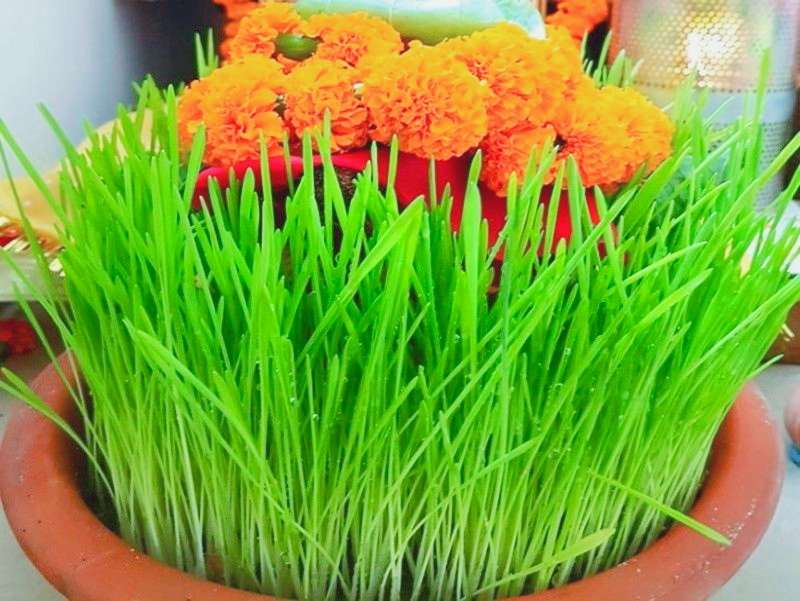
Patna | March 19, 2026 II As Chaitra Navratri commenced today with the sacred ritual of Ghatasthapana, devotees across India began sowing barley (jau) seeds in earthen pots—an age-old tradition that marks the beginning of spiritual observance and devotion to Maa Durga. Within a few days, these seeds sprout into tender green shoots known as Jawara (or Jayanti), carrying within them a deep philosophical and spiritual symbolism rooted in Hindu thought.
Far beyond a ritualistic practice, the growth of Jawara serves as a living metaphor for the fundamental principles of life, nature, and the eternal cycle of birth, death, and rebirth—samsara.
The Philosophical Essence of Samsara
In Hindu philosophy, samsara represents the unending cycle of existence—birth, life, suffering, death, and rebirth—governed by the law of karma. The atman (soul) journeys through countless lifetimes, inhabiting different bodies, until it attains moksha, liberation from this cyclical process.
The Jawara ritual beautifully translates this abstract concept into a simple, observable natural phenomenon, making profound philosophy accessible through daily devotion.
Symbolism of Jawara: A Living Cycle
- Dormancy as Death
The dry barley seeds, seemingly lifeless when placed in the soil, symbolize death—a state of stillness and dissolution. Just as the physical body perishes, leaving behind the departing soul, the seed appears inert, holding life in a latent form.
- Sprouting as Rebirth
With the nurturing elements of water, soil, and the divine invocation of Maa Durga, the seeds awaken and begin to sprout. This transformation mirrors rebirth—the soul taking on a new form, emerging afresh after the end of a previous existence.
- Growth as Life and Renewal
As the Jawara grows taller and greener each day, it reflects the flourishing of life. Occurring during Vasant Ritu (spring), this growth aligns with nature’s own cycle of renewal—moving from winter’s dormancy to spring’s vitality. It symbolizes abundance, nourishment, and the sustaining power of Shakti, the divine feminine energy.
- Dissolution and Return to Earth
By Navami (March 27, 2026, celebrated as Ram Navami) or Dashami, the fully grown Jawara is offered in worship and then respectfully immersed in water or placed beneath a tree. This act signifies dissolution—returning to the earth and completing the cycle, preparing the ground for future regeneration.
Devotion, Faith, and Inner Reflection
Throughout the nine days of Navratri, devotees care for the Jawara with deep reverence, often viewing it as a manifestation of the Goddess herself, associated with Maa Annapurna—the provider of nourishment and sustenance. The quality of the sprouts holds symbolic meaning: lush, vibrant growth is seen as a sign of divine blessings, prosperity, and spiritual harmony, while weaker growth gently encourages introspection, stronger faith, and mindful action (karma).
A Timeless Teaching Through Nature
Rooted in Vedic and Puranic traditions, the Jawara ritual offers a powerful reminder of Hinduism’s core worldview—that existence is cyclical, interconnected, and ever-renewing. It teaches that endings are not final; they are transitions. Every dissolution carries within it the seed of a new beginning.
In the quiet, steady growth of these green shoots lies a profound truth: life, like nature, is a continuous journey of transformation. Jai Mata Di


