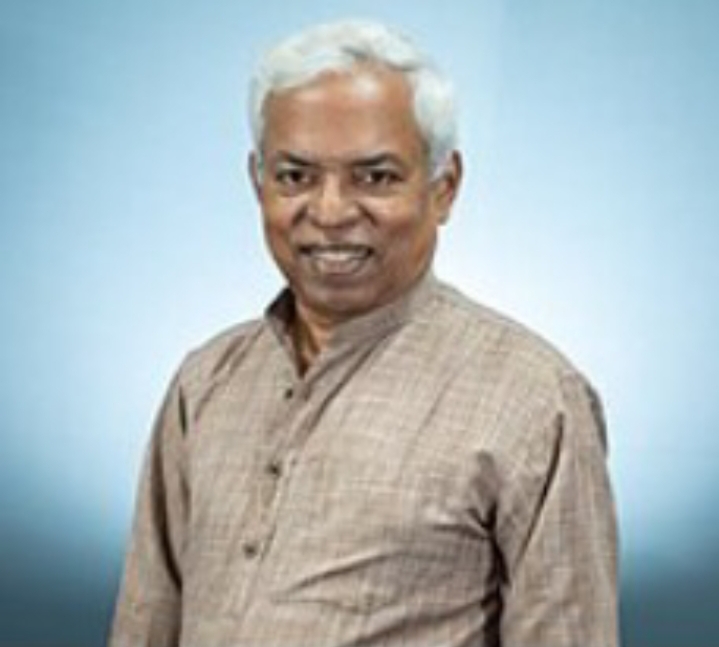
Dr. Kuruvilla Pandikattu SJ*
Our modern world does not suffer from a lack of information. It suffers from a lack of orientation. Our systems are faster, more interlinked, and more opaque than the moral habits with which we try to manage them. The language of VUCA—volatility, uncertainty, complexity, ambiguity—was popularised to describe precisely this condition: environments where prediction weakens and judgement becomes more decisive than mere expertise (Bennett & Lemoine, 2014). More recently, BANI—brittle, anxious, non-linear, incomprehensible—names the felt texture of the same world: the sense that small shocks propagate, explanations arrive late, and human beings carry a background hum of unease (Cascio, 2020). In such a climate, spirituality is not a luxury. It is a form of civilisational maintenance.
By “spirituality” I do not mean a retreat into private emotion, nor a brand of religiosity competing for market share. I mean the disciplined cultivation of interiority: attention, conscience, reverence, and the capacity to recognise the other as more than a means. This can be articulated within religious traditions; it can also be articulated within atheism as a commitment to depth, dignity, and responsibility without metaphysical guarantees. The point is not uniform belief but shared practice: learning to inhabit reality without shrinking it to utility.
This is why a “mysticism of the marketplace” (Karl Rahner) is not an eccentric idea. Markets, organisations, and public institutions are not value-neutral machinery; they are theatres where desire is trained, where fear is amplified or soothed, and where people are quietly shaped. If spirituality is confined to temples, it becomes socially irrelevant; if it enters work and public life, it becomes ethically consequential. The workplace spirituality literature—at its best—argues that meaning, calling, and community are not sentimental add-ons but forces that influence responsibility, integrity, and long-term organisational health (Mitroff & Denton, 1999; Fry, 2003). A spiritually thin institution tends to become an anxious institution: it compensates with control, metrics, surveillance, and the fiction that everything important can be measured.
Politics, too, needs spirituality—not as sectarian rule, but as moral atmosphere. Without some interior anchor, politics collapses into performance, tribalism, and the instrumentalisation of persons. A spiritually informed public life is one where disagreement remains possible without dehumanisation, and where power is answerable to something deeper than victory. Here I find Paul Ricoeur helpful: symbols and narratives are not childish leftovers but vehicles of meaning that keep human self-understanding from flattening into calculation. Likewise, William James reminds us that “religious experience” is often about transformation of perception and conduct, not merely assent to propositions. And Dalai Lama has argued for a secular ethics grounded in compassion and human flourishing rather than doctrinal enforcement.
So the claim is simple but demanding: as the world becomes more complex, we need a higher level of spirituality —not higher in prestige, but higher in maturity. We need practices that strengthen attention against distraction, courage against ambient anxiety, and compassion against the convenience of contempt. If we cannot grow inwardly, we will try to manage complexity outwardly through ever more control. That is how societies become efficient and inhuman at the same time.
Spirituality, then, is the common ground beneath diverse traditions and convictions: the art of becoming answerable—at work, in politics, and in daily life—to the full dignity of reality. It is the art of becoming answerable, authentic and responsible, precisely in our chaotic, complex and dynamic world!
(The views expressed are solely those of the author.)
*(www.kuru.in | https://en.wikipedia.org/wiki/Kuruvilla_Pandikattu)