By Kanchan Choudhary
Mithila/ Bihar, September 14, 2026 – As the Chaurchan festival is observed across the Mithila region today, the ancient concept of “Mithya Kalank” (false stigma or false accusation) once again comes into focus.
The belief, deeply rooted in Hindu mythology, explains why most of India traditionally avoids looking at the moon on Bhadrapada Shukla Chaturthi (Ganesh Chaturthi), while people in Mithila deliberately worship it. According to popular legend, Lord Ganesha once stumbled or fell while riding his mouse. The Moon God, Chandra, laughed at his appearance. Angered by the mockery, Ganesha cursed the moon: anyone who looked at Chandra on this particular day would face false accusations, blame for crimes they did not commit, or social stigma — known as Mithya Dosha or Mithya Kalank. The curse is said to have made the moon itself appear “tainted” on this tithi.
A related story from the Puranas involves Lord Krishna and the Syamantaka gem. After seeing the moon on this day, Krishna was falsely accused of stealing the precious jewel. The gem had actually been taken by others and later recovered by Krishna after a series of events involving Prasena and Jambavan. The episode is often cited as an example of how the moon’s curse can bring undeserved blame even upon the divine.In most parts of India, the traditional response has been to avoid gazing at the moon on Ganesh Chaturthi evening to escape the risk of Mithya Kalank. In the Mithila region of Bihar and parts of Nepal, however, the opposite practice developed.
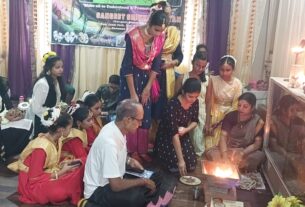
Married women and families observe Chaurchan (also called Chauth Chand), fasting during the day and offering Arghya to the moon at night. The ritual is believed to neutralise the curse, remove false stigma, and bring prosperity and protection to the family. Local tradition also links the public celebration of moon worship in Mithila to the 16th century, when King Hemangad Thakur and Queen Hemalata are said to have encouraged viewing and honouring the moon after the kingdom was freed from certain burdens — describing it as the moon of Mithila being liberated from its own stigma.On this day of Chaurchan 2026, the mythology of Mithya Kalank continues to shape both caution and devotion. While many across the country still choose not to look at the rising moon, in Mithila the same celestial body is welcomed with prayers, prasad, and the belief that proper worship can turn a curse into a blessing.